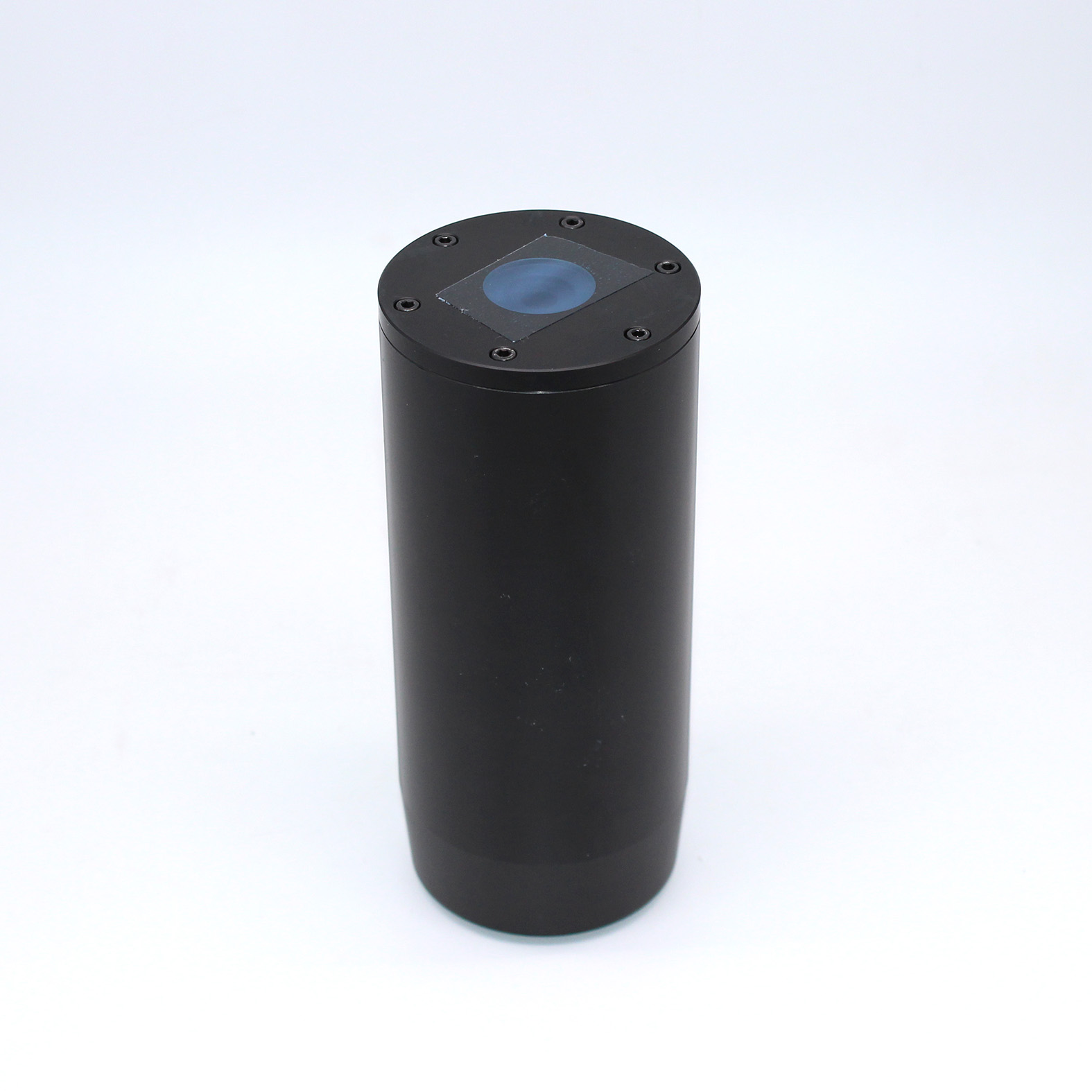
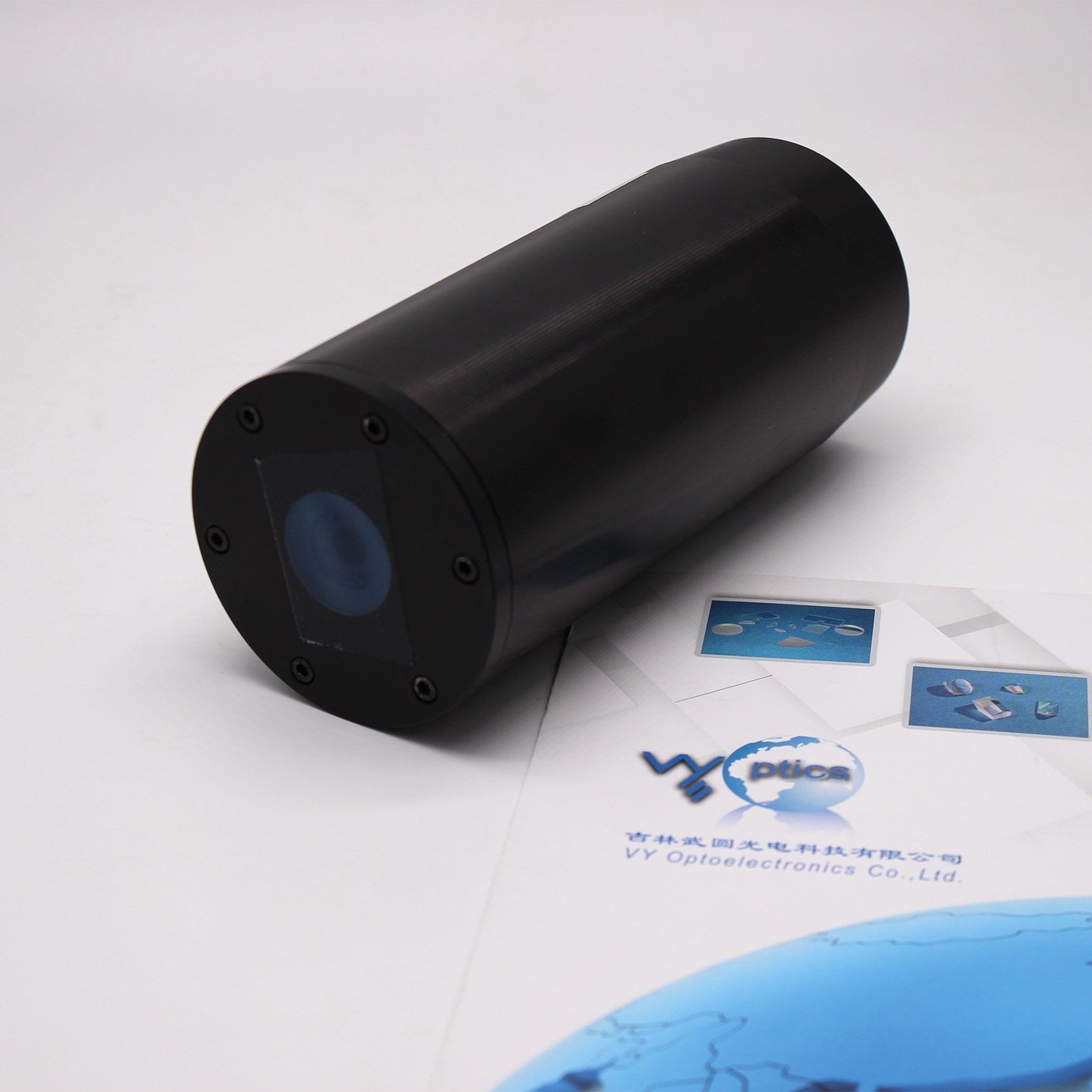
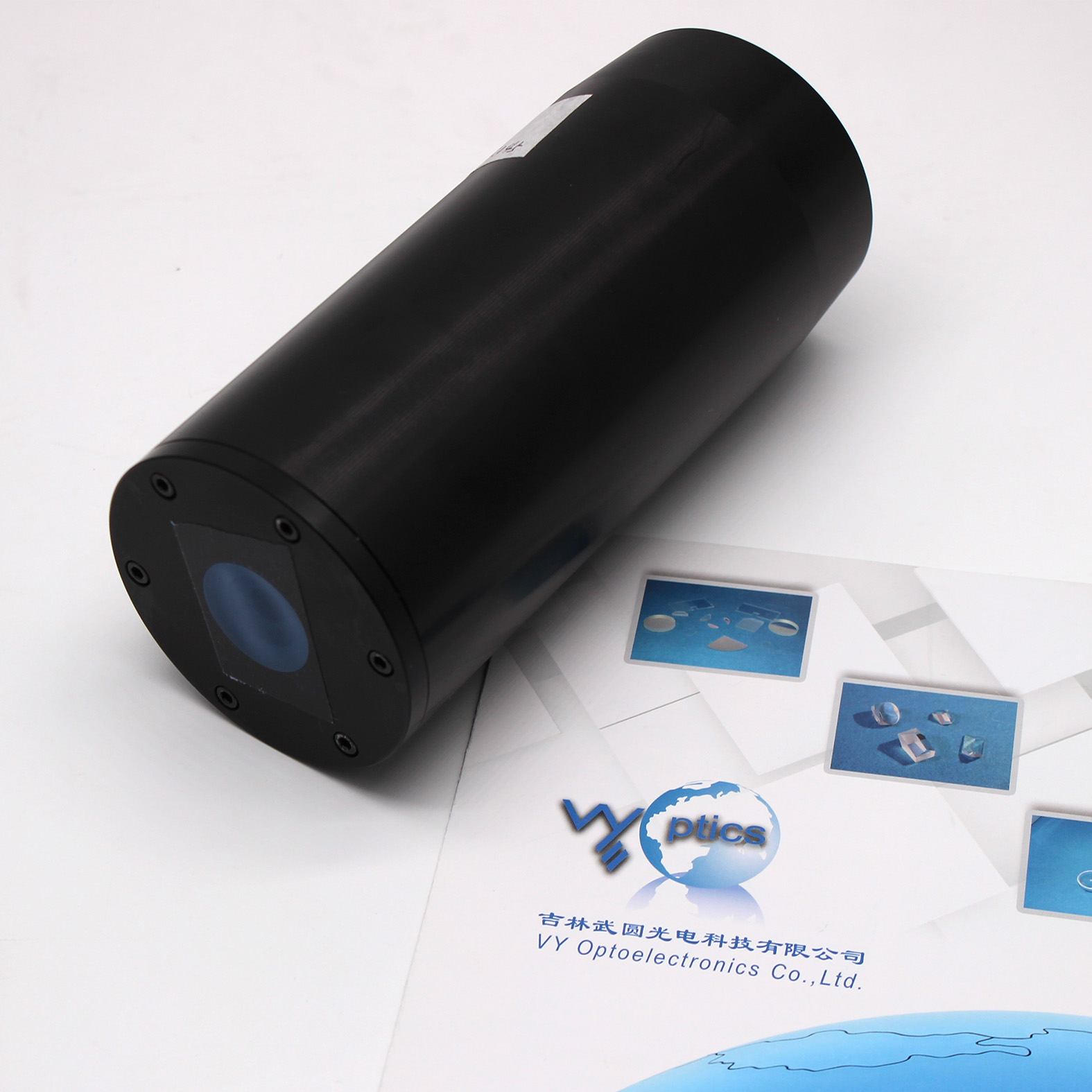
Core Advantages of Chromatic Confocal Dispersive Objective Lens
- Large numerical aperture of 0.22 on the objective side, enhancing light signal collection efficiency and making it suitable for weakly reflective surfaces such as metals and thin films
- Uniform axial dispersion across a wide wavelength band ensures linearity and accuracy in thickness and displacement measurements
- Highly concentrated spot energy improves the signal-to-noise ratio of inspections and reduces the risk of missing fine features
- Standardized industrial interfaces ensure direct compatibility with mainstream equipment racks, reducing integration and modification costs
Key Optical Specifications
| Product Model | VY-DO50/0.22 Spectral Confocal Dispersive Objective |
| Operating Band | 400 nmto700nm(visible light range) |
| Effective Focal Length | 49.9 mm |
| TransverseMagnification | -1.54*(invertedimage) |
| Object-SideNumericalAperture(NA) | 0.22 |
| Image-SideNumericalAperture(NA) | 0.145 |
| OperatingMode | On-axisoperation,compatiblewithpoint-scanninginspection systems |
| Object-SideWorkingDistance | Typicalvalue:90mm |
| MinimumResolvableDetail | ≤1.2μm(400nmwavelength,Rayleighcriterion) |
| AxialDistortion | <0.1%,negligible |
| Flat-fieldPerformance | On-axisflat-fieldimaging,flatimageplane |
Imaging and Focusing Performance
- Confocal Spot and Resolution Performance: The on-axis image spot of this objective is close to the diffraction limit, with high energy concentration; at a wavelength of 400 nm, the resolution on the object side is better than 1.2 μm, enabling clear identification of minute features under examination and supporting micro- and nanoscale dimensional and thickness measurements
- MTF and Imaging Contrast: In the on-axis central region at a spatial frequency of 100 lp/mm, the MTF is greater than 0.4, ensuring excellent imaging contrast. This guarantees the intensity and stability of spectral confocal signals and minimizes fluctuations in measurement data.
- Stray Light Control: Optical lenses are coated with broadband anti-reflective coatings, and the inner walls of the lens barrel undergo a blackening and anti-glare treatment. This effectively suppresses stray light and surface reflection glare, improving the system’s signal-to-noise ratio and making it suitable for low-contrast, low-reflectance samples.
- Flat-Field Uniformity: The on-axis imaging plane is flat, and image quality is uniform across the entire aperture, ensuring stable signal intensity during point scanning with no significant edge energy attenuation.
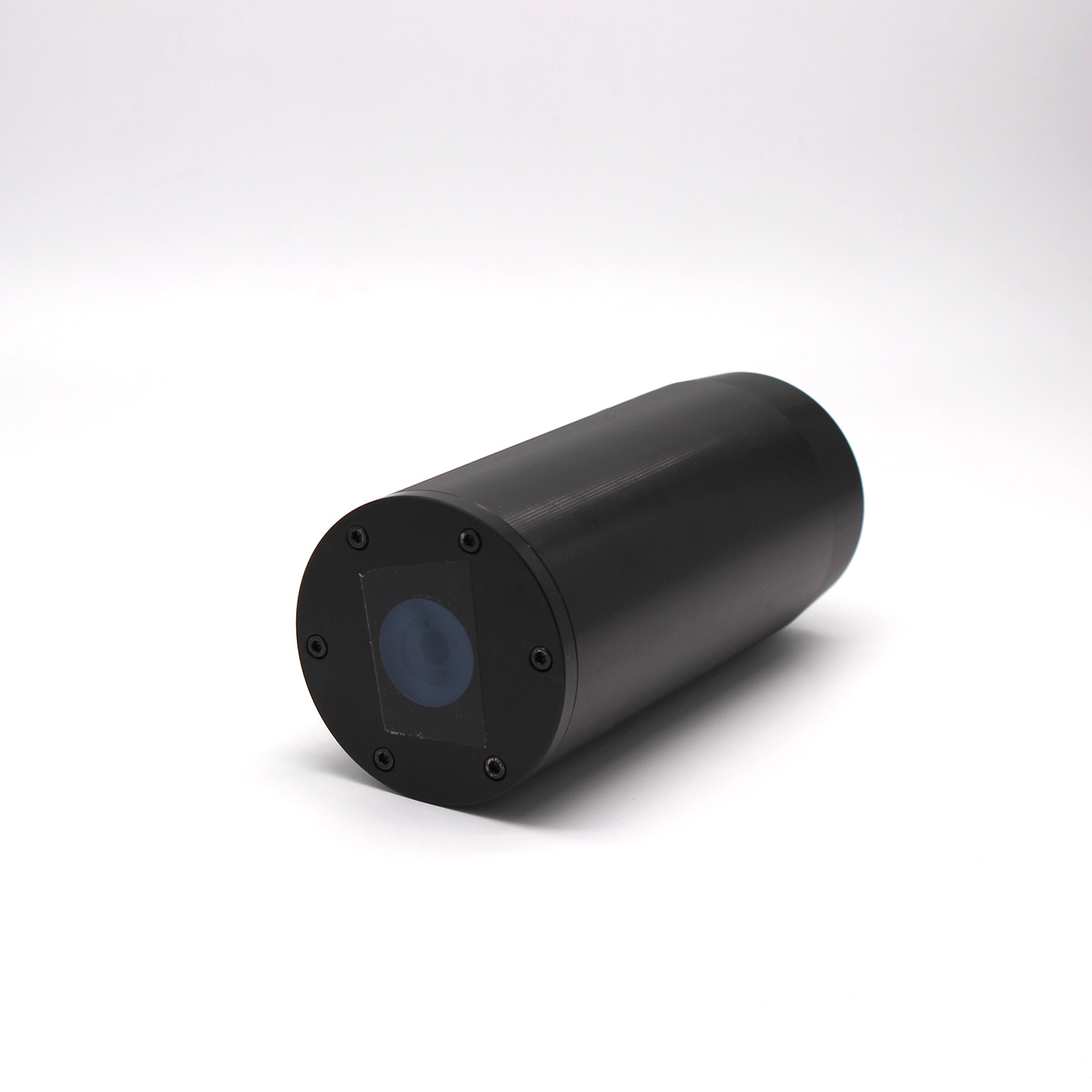
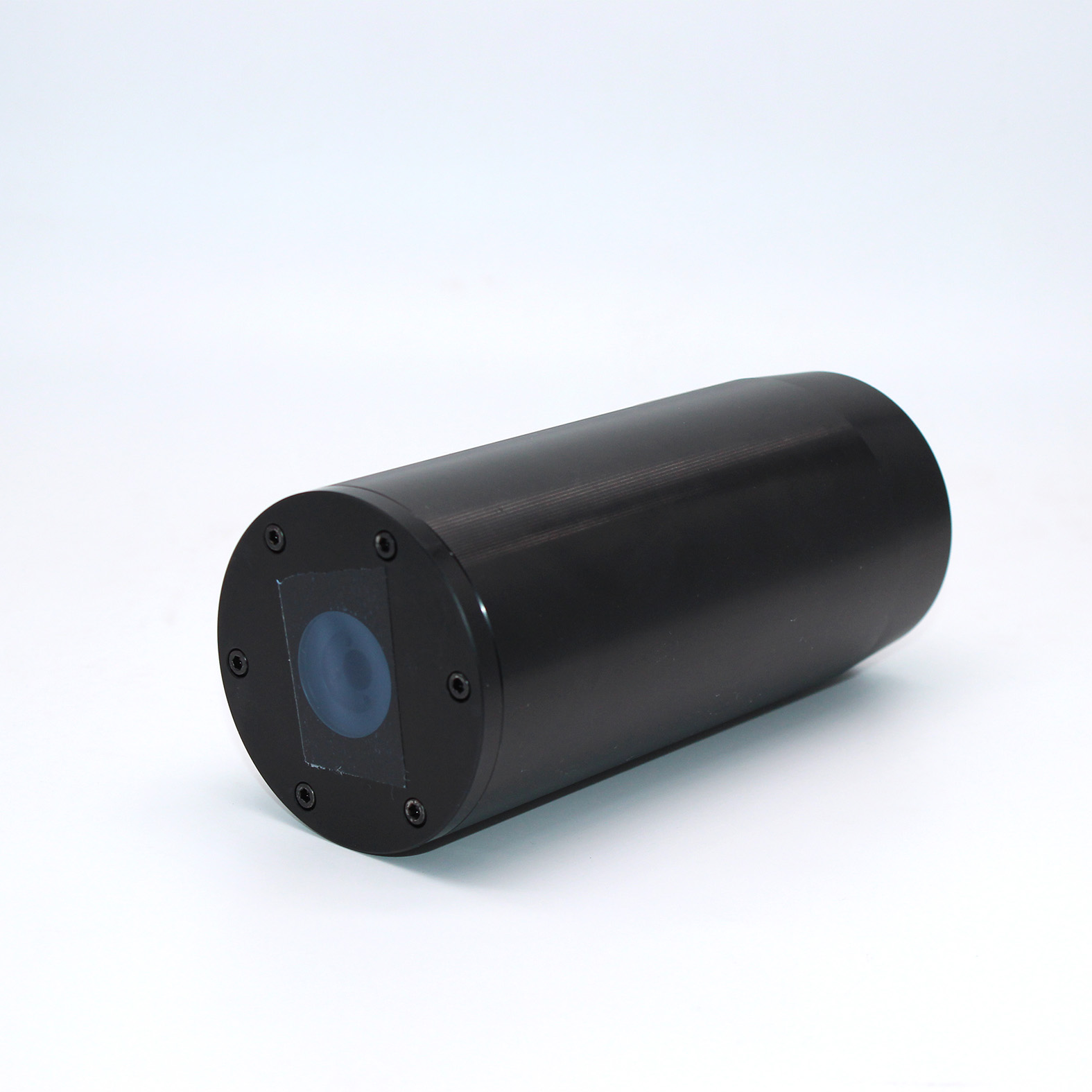
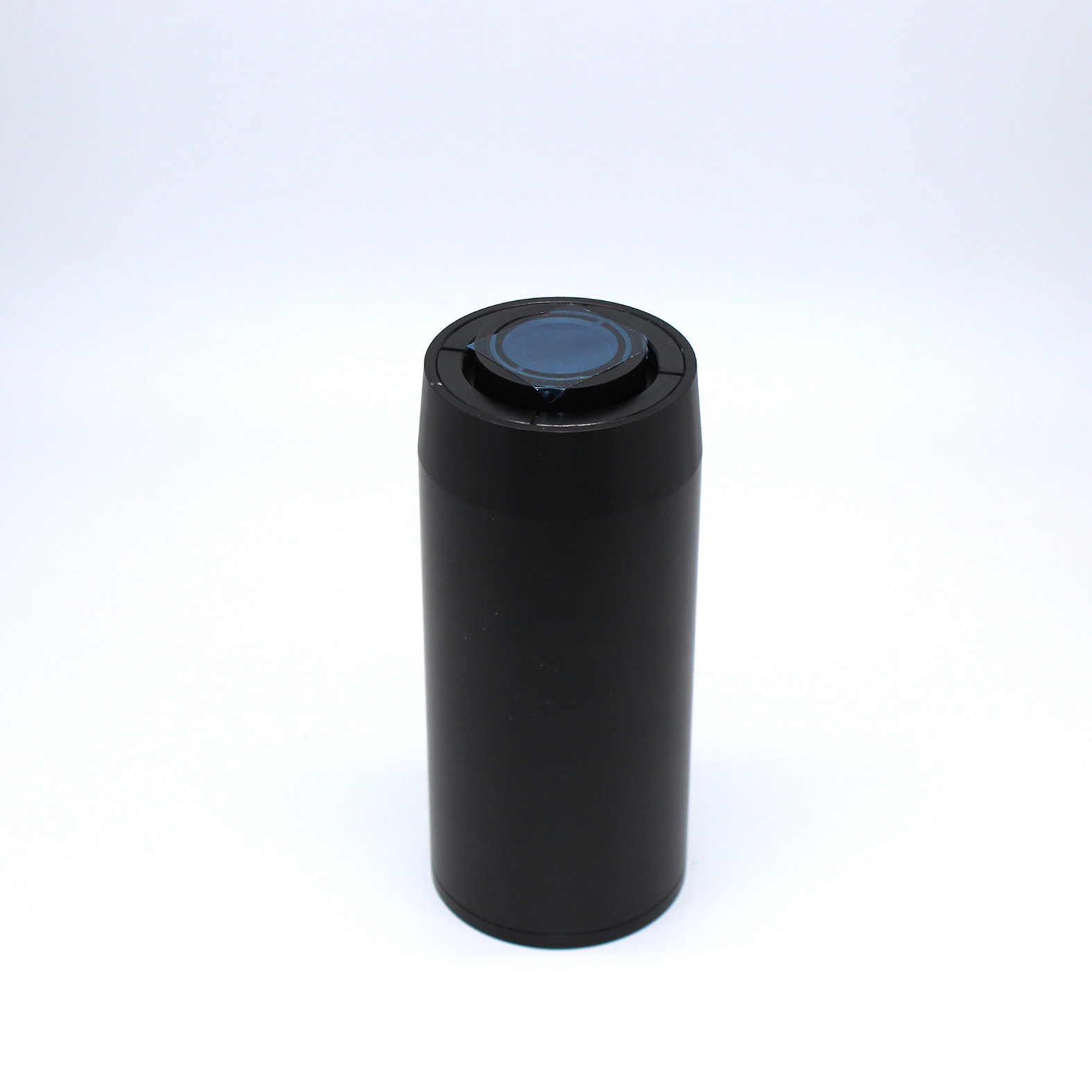
Picture of Chromatic Confocal Dispersive Objective Lens
Detailed Video
Typical application scenarios
- Precision measurement of semiconductor wafer and multilayer film thicknesses
- Thickness and parallelism inspection of glass, sapphire, and optical lenses
- Online inspection of MEMS microstructure topography and displacement
- High-precision dimensional inspection of precision metal and plastic components
- Core optical unit for spectral confocal displacement sensors
People Also Ask
What is a chromatic confocal lens used for?
It is commonly used for precise distance measurement, surface profiling, dimensional inspection, and non-contact optical measurement.