Introduction
Selecting the right industrial lens is a critical step in building reliable machine vision and industrial imaging systems. However, many projects encounter image quality issues, unstable performance, or unexpected delays—not because of sensor or software limitations, but due to mistakes made during lens selection.
These mistakes are common, even among experienced buyers, and often stem from focusing on specifications alone while overlooking manufacturing, assembly, and system-level factors.
This article highlights the most common mistakes in industrial lens selection and explains how to avoid them to achieve stable, real-world performance.
Mistake 1: Focusing Only on Resolution Numbers
One of the most common mistakes is choosing a lens based solely on nominal resolution.
Why this is a problem:
- Resolution does not guarantee contrast
- Edge performance is often ignored
- Real operating aperture is overlooked
A lens that “matches” the sensor resolution on paper may still deliver poor image quality in practice if contrast and uniformity are insufficient.
How to avoid it: Evaluate overall image quality across the full field of view and under real working conditions—not just resolution specifications.
Mistake 2: Ignoring Assembly and Alignment Sensitivity
Some lens designs are highly sensitive to small assembly errors.
When alignment sensitivity is underestimated:
- small decentration causes asymmetric blur
- performance varies between units
- batch consistency becomes difficult
This issue often appears only after production begins.
How to avoid it: Choose lenses designed with manufacturability and realistic assembly tolerances in mind, and work with suppliers who control alignment and centration precisely.
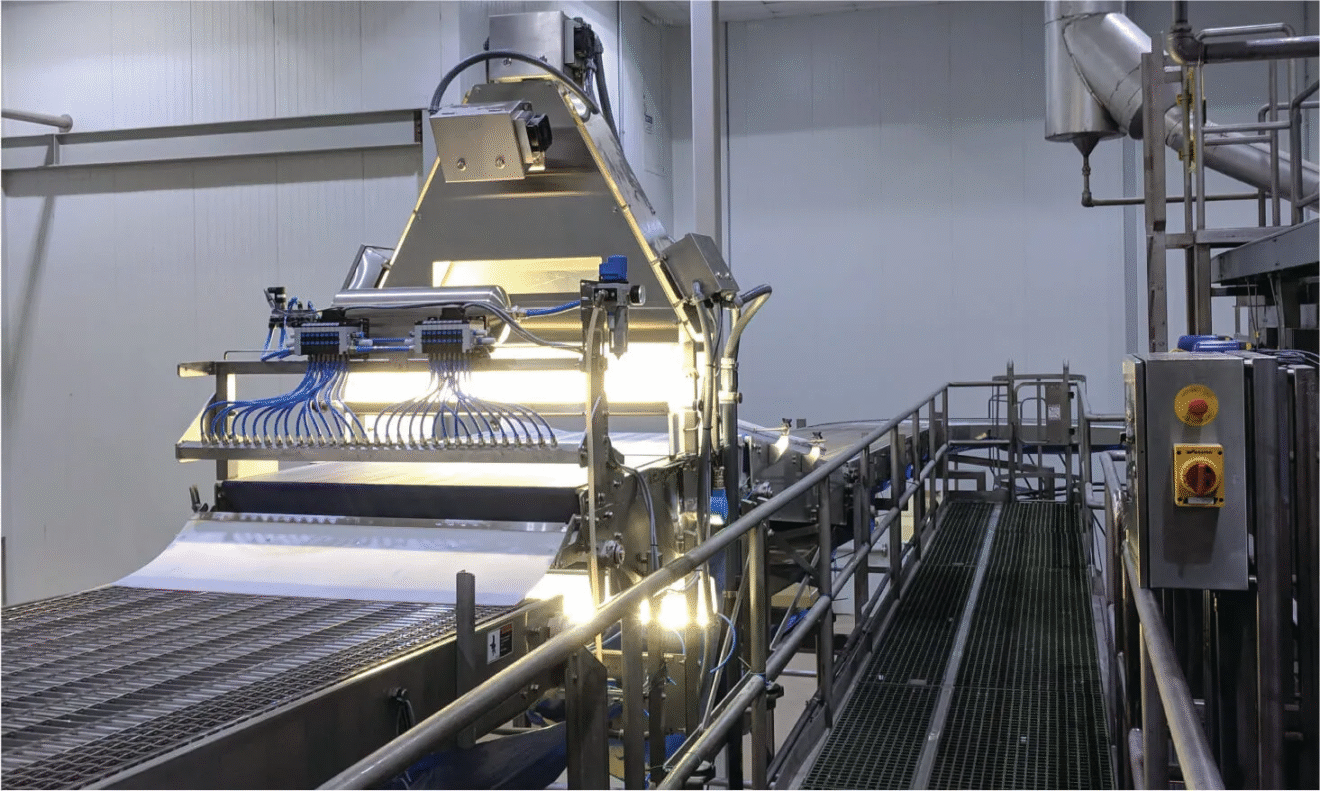
Mistake 3: Underestimating Mechanical and Environmental Conditions
Industrial lenses rarely operate in ideal environments.
Common overlooked factors include:
- vibration
- temperature variation
- dust and contamination
- long-term mechanical stress
A lens that performs well in the lab may degrade quickly on a production line.
How to avoid it: Ensure the lens and its mechanical structure are designed for industrial conditions, with sufficient stability and environmental protection.

Mistake 4: Assuming Software Can Fix Optical Problems
Software correction is powerful—but it has limits.
Software cannot fully compensate for:
- poor optical contrast
- unstable alignment
- inconsistent distortion behavior
Relying too heavily on post-processing often increases system complexity without solving the root problem.
How to avoid it: Prioritize optical and mechanical quality first, then use software for fine optimization rather than fundamental correction.
Mistake 5: Selecting a Lens Without Considering System Integration
An industrial lens must work as part of a system, not in isolation.
Integration issues often arise from:
- incompatible mounting interfaces
- misaligned illumination geometry
- insufficient space for adjustment
These issues can cause delays and unexpected redesigns.
How to avoid it: Evaluate lens selection together with camera housing, lighting, mechanical fixtures, and calibration strategy.
Mistake 6: Choosing Based on Sample Performance Only
A single good sample does not guarantee production success.
Many problems appear only when:
- multiple units are assembled
- tolerances accumulate
- long-term stability is tested
How to avoid it: Ask how the supplier ensures consistency across batches and how performance is verified beyond prototypes.
Mistake 7: Not Asking the Right Questions to the Supplier
Buyers often assume that suppliers will proactively highlight risks. In reality, the right questions must be asked.
Critical questions include:
- How is lens centration and alignment controlled?
- How sensitive is the design to assembly error?
- How is consistency ensured in volume production?
- What support is available if performance issues arise?
The answers to these questions often reveal more than technical specifications.
How to Avoid These Mistakes: A Practical Approach
To avoid common pitfalls in industrial lens selection:
- focus on system-level requirements
- consider manufacturability and assembly accuracy
- evaluate mechanical stability and environment
- verify consistency, not just sample performance
- choose suppliers with strong alignment and integration expertise
This approach significantly reduces risk and improves long-term system reliability.
Conclusion
Industrial lens selection is not just a specification-matching exercise. Most real-world issues arise from overlooked factors related to manufacturing, assembly, alignment, and integration.
By understanding and avoiding these common mistakes, engineers and buyers can select lenses that deliver stable, repeatable performance in real industrial environments.
Work With a Supplier Who Understands Industrial Reality
We support industrial imaging projects with:
- custom industrial lens solutions
- high-precision optical assembly and alignmentopto-mec
- hanical integration support
- stable performance in batch production
If you are selecting lenses for an industrial imaging system and want to avoid costly mistakes,
📩 contact us today to discuss your application or request a quotation.