Introduction
In optical systems, image quality is often associated with lens design parameters such as focal length, F-number, or material selection. However, in real-world manufacturing, optical lens assembly accuracy is frequently the decisive factor that determines whether a lens performs as designed—or falls short.
Even a well-designed optical system can suffer from degraded performance if assembly tolerances, alignment, and centration are not properly controlled. This is especially true for multi-element lenses used in industrial imaging, infrared systems, microscopy, and opto-mechanical equipment.
What Does Optical Lens Assembly Accuracy Mean?
Optical lens assembly accuracy refers to how precisely optical elements are positioned and aligned within the mechanical housing. It mainly includes:
- Optical axis alignment
- Lens centration (coaxiality between optical and mechanical axes)
- Tilt control between elements
- Axial spacing accuracy
- Mechanical stability after fixation
Small errors at this stage can introduce significant optical aberrations, even when individual components meet surface-quality specifications.
Why Assembly Accuracy Has Such a Strong Impact on Image Quality
Assembly errors typically lead to:
- Reduced contrast and sharpness
- Increased aberrations such as coma and astigmatism
- Image blur at the edge of the field
- Inconsistent performance between units
These effects become more severe in systems with:
- Large apertures
- Long focal lengths
- Infrared or low-light imaging requirements
- High-resolution sensors
In many cases, assembly-induced errors limit image quality more than the optical design itself.
The Role of Centration and Alignment in Lens Assembly
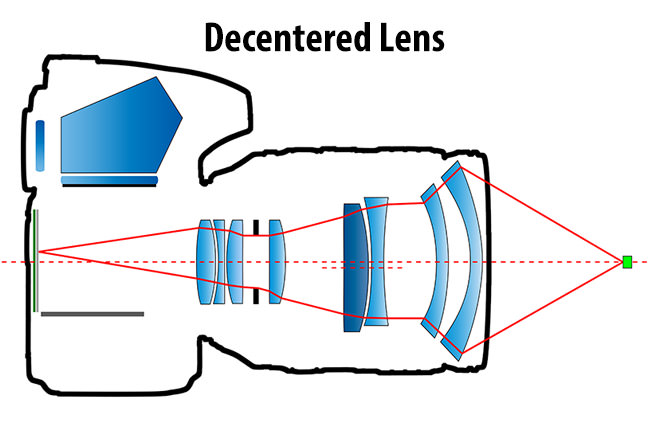
One of the most critical aspects of lens assembly is centration accuracy.
When the optical center of a lens element does not coincide with the mechanical axis of the barrel, even micron-level decentration can significantly degrade system performance. This often results in asymmetric aberrations and unstable image quality.
High-precision alignment processes ensure that:
- Optical and mechanical axes are properly matched
- Lens groups remain stable after assembly
- Performance consistency is maintained across production batches
For advanced optical systems, manual assembly alone is not sufficient to achieve this level of precision.


From Optical Design to Real-World Performance
Optical design software provides theoretical performance predictions under ideal conditions. In practice, the final performance depends on how closely the assembled lens matches those ideal conditions.
Key factors affecting the gap between design and reality include:
- Assembly tolerance accumulation
- Mechanical stress during fixation
- Inadequate centration controlLack of
- precision alignment processes
This is why optical manufacturing expertise is just as important as optical design capability.
Applications That Demand High Assembly Precision
High-accuracy lens assembly is especially critical in:
| Application | Reason |
| Machine Vision | Accurate edge detection and measurement |
| Infrared Imaging | Stable contrast and thermal sensitivity |
| Microscopy | High resolution and field uniformity |
| Industrial Inspection | Reliable defect detection |
| Opto-Mechanical Systems | Long-term alignment stability |
In these applications, poor assembly accuracy often leads to system-level failures rather than minor image degradation.
What Buyers Should Ask Optical Lens Manufacturers
When sourcing optical lenses, buyers should look beyond basic specifications and ask:
- How is lens centration controlled during assembly?
- What alignment methods are used after lens bonding or fixation?Ho
- w is consistency ensured in batch production?
- How is image quality verified after final assembly?
Manufacturers with advanced assembly and alignment capabilities are more likely to deliver reliable, repeatable performance.
Conclusion
Optical lens assembly accuracy is one of the most critical—and often underestimated—factors in achieving high imaging performance.
Precision alignment and centration ensure that the optical design can truly deliver its intended performance in real-world applications. As imaging systems continue to demand higher resolution and stability, assembly expertise becomes a key differentiator among optical manufacturers.
Partner With a Precision Optical Lens Manufacturer
We specialize in:
- High-precision optical lens assembly
- Advanced centration and alignment processes
- Infrared and industrial optical systems
- Opto-mechanical integration for demanding applications
If you are looking for a reliable optical partner who understands how assembly accuracy affects real image quality, 📩 contact us today to discuss your project or request a quotation.