Introduction
Hydraulic valve bores and deep-bore components are not always easy to inspect.
From the outside, the part may look clean and well machined. However, scratches, burrs, pits, contamination, and machining marks can still remain on the inner wall.
For hydraulic components, these small internal defects may affect sealing, flow stability, assembly quality, and long-term reliability.
Because of this, many manufacturers need a practical way to inspect the inner wall of bores, sleeves, bushings, cylinder blocks, and other deep-hole parts.
A standard machine vision lens is often not enough for this type of inspection. The lens must enter a narrow space, work with limited lighting, and still provide a useful view of the internal wall.
This is where an inner wall inspection lens becomes useful.
Why Hydraulic Bore Inspection Is Difficult
Hydraulic parts often have narrow, deep, and reflective internal surfaces.
In practice, this creates several inspection challenges.
First, the available space is limited. The lens, lighting, and mechanical structure must fit into or near the bore. If the front end of the lens is too large, the system cannot access the inspection area.
Second, lighting is not easy. The inside wall may reflect strongly in some areas, while other areas remain dark. As a result, scratches or burrs may disappear if the lighting angle is not suitable.
Third, the defect may appear anywhere along the bore wall. Therefore, the system may need axial scanning, rotational inspection, or helical scanning to cover the internal surface.
For these reasons, hydraulic bore inspection should consider the lens, lighting, camera, and mechanical movement together.
Common Defects Inside Hydraulic Bores
Inner wall defects can come from machining, cleaning, handling, or assembly.
Common inspection targets include:
- scratches
- burrs
- pits
- corrosion
- foreign objects
- contamination
- machining marks
- surface damage
- coating defects
- edge defects inside holes
Some defects are easy to see. However, others only become visible under the right lighting direction.
For example, a burr may need side lighting to show its height and edge shape. By contrast, contamination or stains may need more uniform lighting to improve contrast.
Therefore, choosing the lens alone is not enough. The optical inspection setup should match the defect type.
What Kind of Lens Is Needed?
For hydraulic valve bores and deep-bore parts, the lens usually needs a compact front-end design.
A smaller front end helps the optical system access narrow internal spaces. At the same time, the lens still needs enough field of view to observe the bore wall effectively.
A useful inner wall inspection lens should consider:
- inner diameter of the part
- inspection depth
- required field of view
- defect size
- lighting method
- camera sensor size
- scanning method
- mechanical space
- working environment
If the bore diameter is small, the outer diameter of the lens becomes very important.
If the bore is deep, the system may need a stable scanning structure.
Also, if the part surface is reflective, lighting design becomes just as important as the lens.
VY-0430 Inner Wall Inspection Lens for Compact Bore Inspection
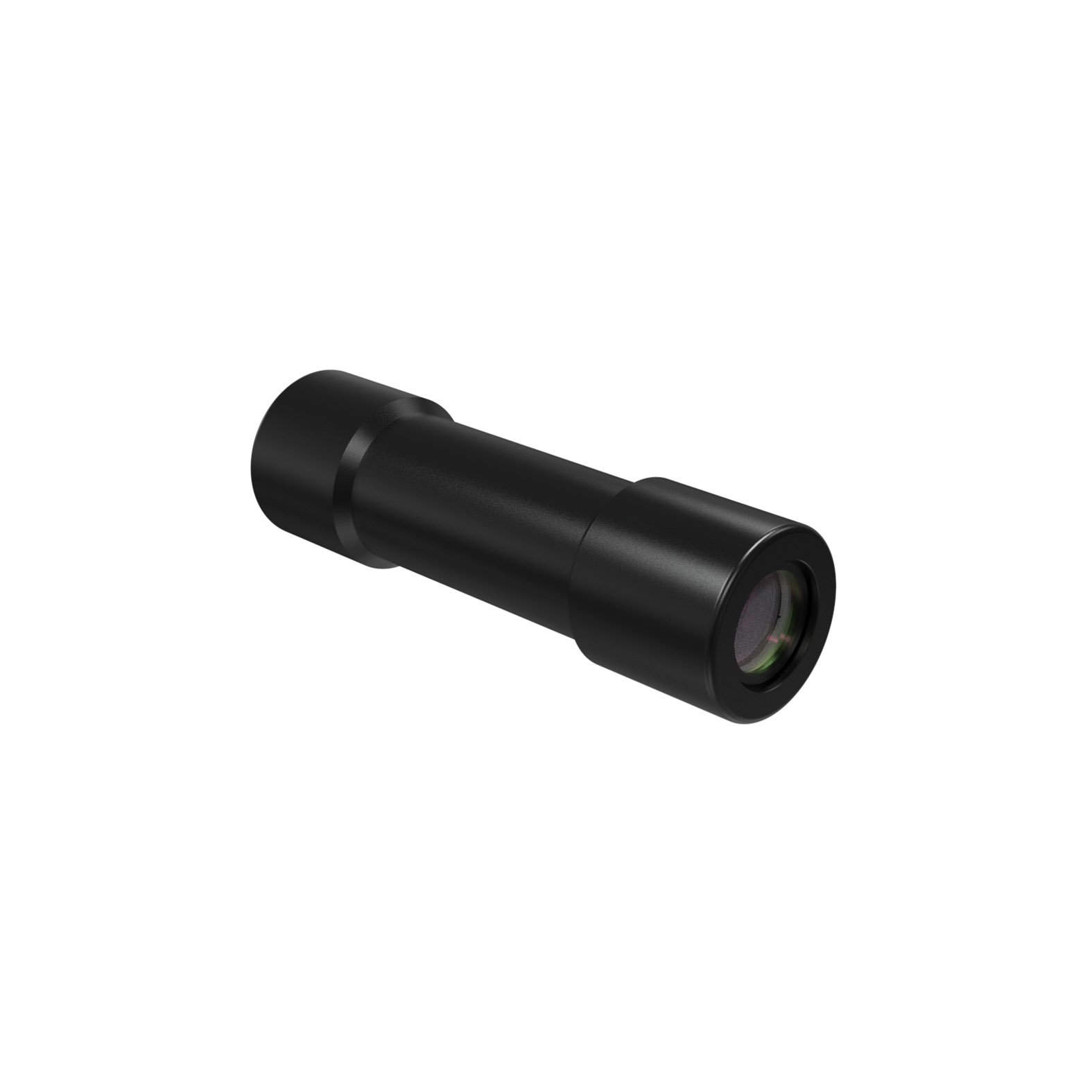
For compact internal inspection systems, VY Optics developed the VY-0430 Inner Wall Inspection Lens.
This lens is designed for deep holes, pipes, bores, tubes, and precision internal cavities.
For hydraulic bore inspection, several features may be useful:
- front-end outer diameter: approx. Φ8.4 mm
- maximum outer diameter: approx. Φ13 mm
- total lens length: approx. 41 mm
- working F-number: F/2.8
- maximum full field of view: approx. 78°
- recommended inner diameter: Φ10 mm or larger
The compact front-end design makes the lens suitable for narrow internal spaces.
Meanwhile, the F/2.8 aperture can help in limited-light conditions, and the wide field of view can help cover more internal wall area during inspection.
The final result still depends on the camera, lighting, scanning method, and mechanical design. However, the VY-0430 can provide a practical optical starting point for hydraulic bore and deep-hole inspection systems.
Inspection Methods for Deep-Bore Components
Different parts may need different inspection methods.
For short bores, fixed-position inspection may be enough.
For longer holes, the system may need to move along the bore axis. In this case, axial scanning can help inspect more depth.
For cylindrical internal walls, rotational scanning can help cover the full inner surface.
In some systems, helical scanning may combine axial and rotational movement. This method can improve surface coverage, but it also requires better mechanical control.
Because of this, customers should confirm the inspection method before choosing the lens.
A lens that works well in a fixed setup may need a different mechanical design for a scanning system.
Typical Hydraulic and Deep-Bore Applications
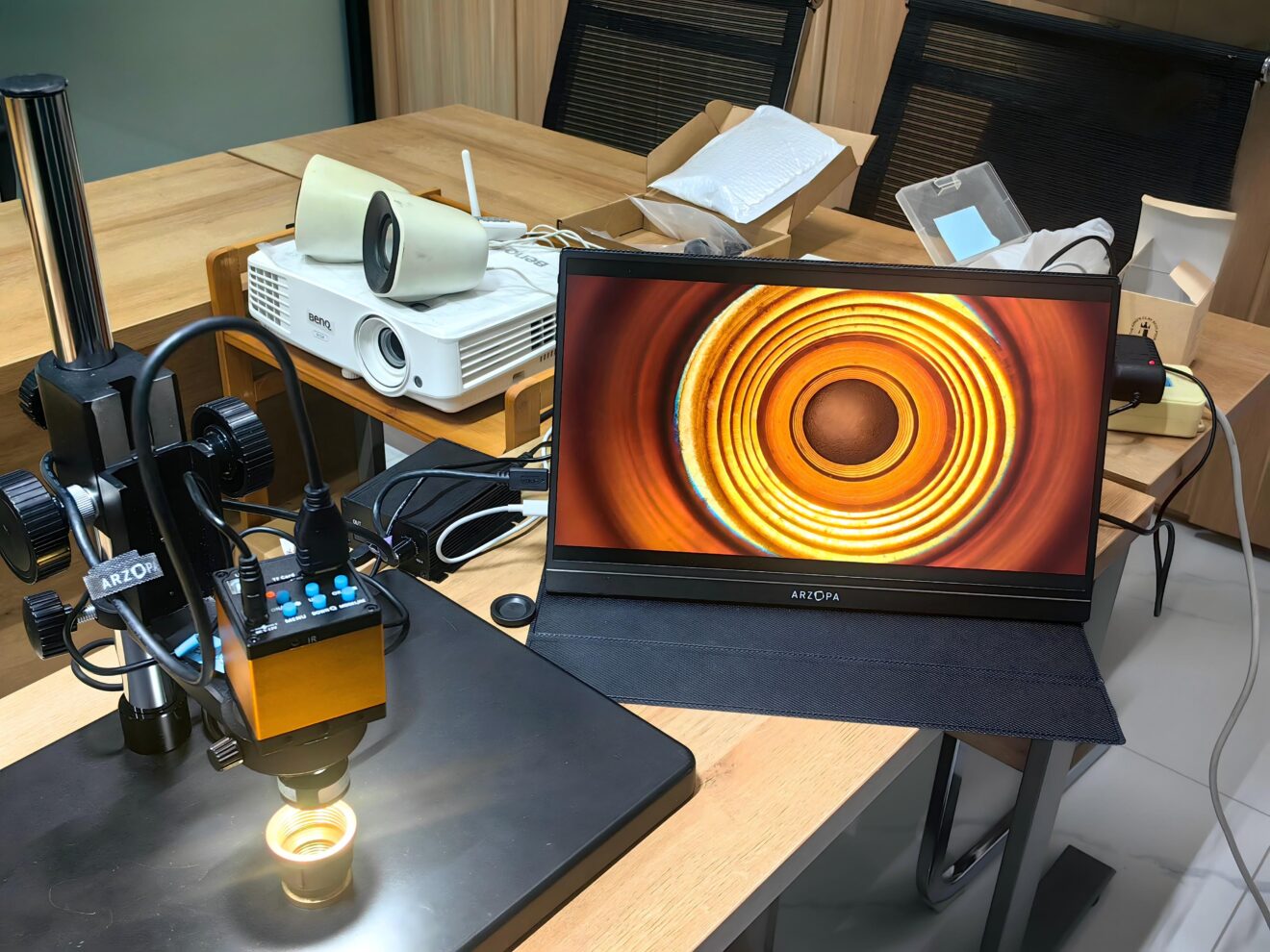
The VY-0430 and similar inner wall inspection lenses may support many hydraulic and precision mechanical applications, such as:
- hydraulic valve bores
- valve bodies
- bushings
- sleeves
- cylinder blocks
- deep-hole machined parts
- oil passages
- precision fluid channels
- pump components
- internal sealing surfaces
In these applications, internal wall quality may affect product performance.
For example, burrs may affect assembly or flow. Scratches may influence sealing. Contamination may create reliability risks. Because of this, inner wall inspection can help improve process control before final assembly.
What Information Helps Us Evaluate the Lens?
Before recommending an inner wall inspection lens, we usually need to understand the real part and inspection requirement.
The most useful information includes:
- inner diameter
- bore depth
- defect type
- minimum defect size
- camera sensor size
- lighting method
- required field of view
- scanning method
- available mechanical space
- surface material and reflectivity
- expected inspection speed
- project stage or expected quantity
Even if some details are not fixed yet, an early discussion can still help.
In many projects, the first goal is not to confirm a final lens immediately. Instead, we first check whether the optical direction is practical.
Final Thoughts
Hydraulic valve bores and deep-bore components need more than a standard external inspection setup.
The inspection system must look inside narrow spaces, handle difficult lighting, and find defects on curved internal walls.
For this type of application, a compact inner wall inspection lens can help build a more practical inspection system.
The VY-0430 Inner Wall Inspection Lens offers a small front-end diameter, wide field of view, and compact structure for deep-hole, bore, and internal cavity inspection.
If you are developing inspection equipment for hydraulic parts, valve bores, bushings, sleeves, cylinder blocks, or other deep-bore components, VY Optics can help review the optical requirements and discuss a suitable lens solution.
Need a Lens for Hydraulic Bore Inspection?
Please send us your part inner diameter, inspection depth, camera sensor, lighting method, defect size, and mechanical space.
We can discuss whether the VY-0430 Inner Wall Inspection Lens or a customized optical solution is more suitable for your hydraulic bore or deep-hole inspection project.