Introduction
In this project, we designed a custom underwater optical lens for deep-sea imaging applications at depths up to 6000 meters.
At this depth, the challenges are very different from typical optical systems.
Instead, the focus shifts beyond image quality to pressure resistance, structural stability, and long-term reliability.
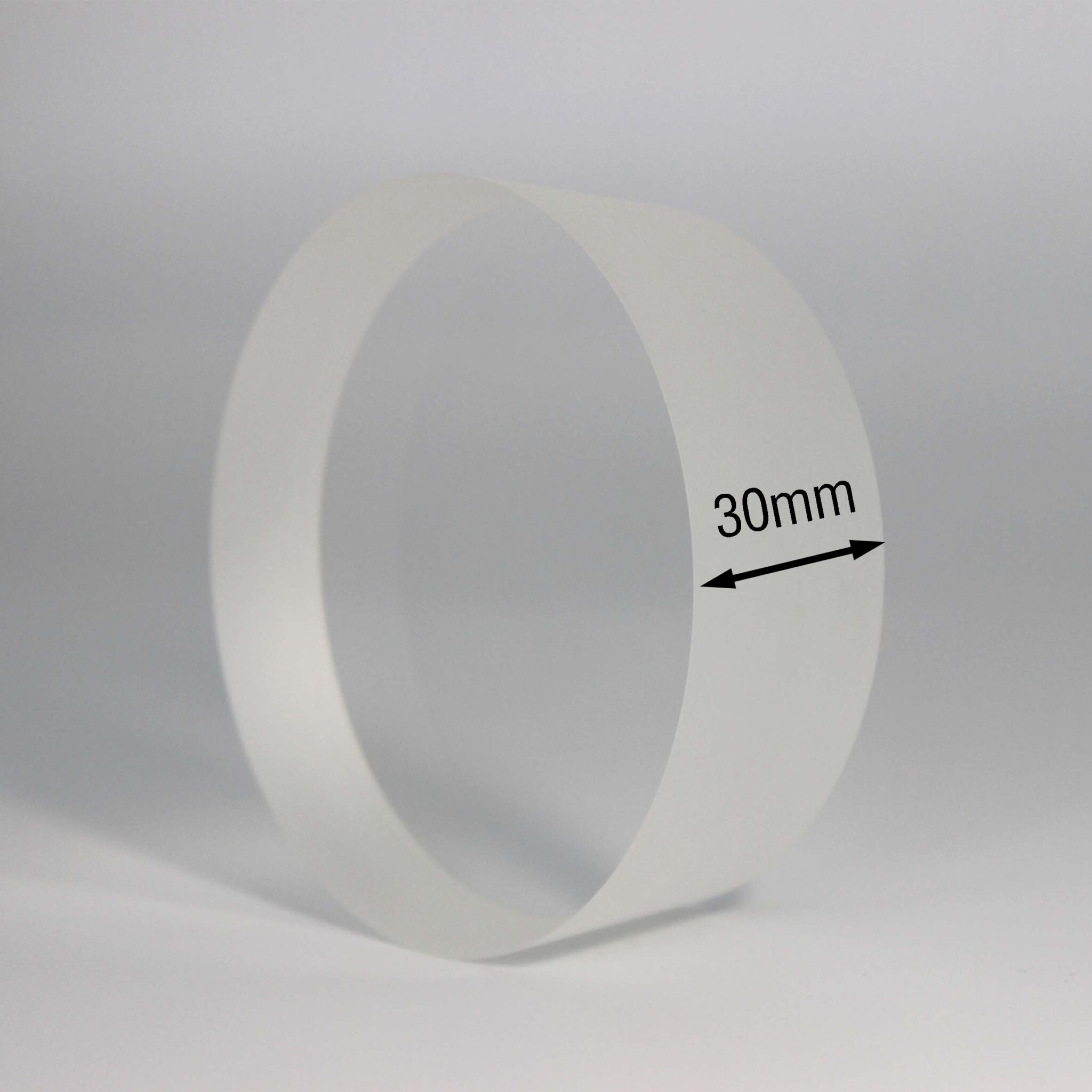
The underwater optical lens shown above was designed for deep-sea imaging applications at depths of up to 6000 meters, where pressure resistance and alignment stability are critical.

This article shares some of our practical experience from this project, focusing on how we approached the optical and mechanical challenges in a real engineering environment.
Project Background
The requirement from the customer was quite clear, but not easy to achieve:
- Stable imaging at 6000m depth
- Minimal distortion across the field
- Reliable performance over long deployment time
- Compatibility with underwater system integration
The system was intended for deep-sea observation and inspection, where image clarity and stability are essential.
What Makes Deep-Sea Optics Challenging?
Compared with standard optical systems, deep-sea applications introduce several practical difficulties.
High Pressure Is Not Just a Mechanical Problem
At around 6000 meters, external pressure exceeds 60 MPa.
In theory, this is a structural issue. But in practice, we found that:
As a result, even very small deformations in optical windows or lens mounts can affect alignment and image quality.
So pressure is not only a mechanical challenge — it directly affects optical performance.
Optical Interfaces Become More Complex
In addition, underwater imaging introduces additional optical effects:
- refractive index differences between water and optical materials
- interface reflections
- distortion caused by optical window geometry
If these are not considered early in the design stage, image quality will suffer.
Alignment Becomes More Sensitive
In this type of system, we observed that alignment tolerance becomes tighter than usual.
In practice, alignment accuracy often has a direct impact on final image quality. Even small errors introduced during assembly can lead to noticeable performance differences — something we have seen repeatedly in real projects. We have discussed similar issues in more detail in our article on common optical alignment errors.
For example, small errors in:
- lens centration
- tilt
- spacing
can lead to noticeable image degradation.
And once the system is sealed for underwater use, adjustment is no longer possible.
Our Approach
In complex systems like this, optical design must consider real-world conditions rather than ideal simulations. This includes manufacturability, tolerance sensitivity, and integration constraints.
Instead of treating optical design, structure, and assembly as separate steps, we approached this project as a combined problem, we therefore approached this project as an integrated problem.
Design with Real Conditions in Mind
From the beginning, we considered:
- underwater optical path
- pressure effects on structure
- manufacturable tolerances
rather than designing purely for ideal conditions.
Material and Structural Considerations
We selected materials and structures based on:
- pressure resistance
- long-term stability
- compatibility with sealing requirements
At the same time, we tried to avoid introducing unnecessary stress into the optical components.
Focus on Assembly and Alignment
In projects like this, assembly is not just a final step — it is part of the design.
The importance of precision assembly in optical systems is often underestimated. In practice, assembly accuracy can have a greater impact than design itself.
>In projects like this, assembly is not just a final step — it is part of the design. In fact, we often see that precision assembly plays a more critical role than expected in determining final system performance.
We paid particular attention to:
- centration control
- alignment repeatability
- stability after fixation
because these directly determine whether the design performance can actually be achieved.
Final Results
In many optical systems, performance loss does not originate from the design itself, but from manufacturing and integration processes. We have explored this topic in more detail in our article on where image quality is really lost in optical systems.
After integration and testing, the system showed:
- stable imaging under deep-sea conditions
- controlled distortion across the field
- consistent performance across units
More importantly, performance remained stable over time, which is critical for real deployment.
Applications
This type of optical solution can be used in:
- deep-sea observation systems
- underwater robotics (ROVs)
- marine research equipment
- underwater inspection tasks
Final Thoughts
From this project, one thing became very clear:
In challenging environments like deep-sea applications, optical performance is not determined by design alone.
It is the result of how well design, structure, and assembly work together.
Work With Us
If you are evaluating optical suppliers or facing challenges in system performance, you may also find our practical guide helpful when selecting a partner.
We work on custom optical systems including:
- underwater imaging optics
- infrared and industrial lenses
- precision optical assembly and alignment
- opto-mechanical integration
If you are working on a similar application or facing challenges in optical system performance, feel free to reach out — we are happy to exchange ideas and see how we can help.